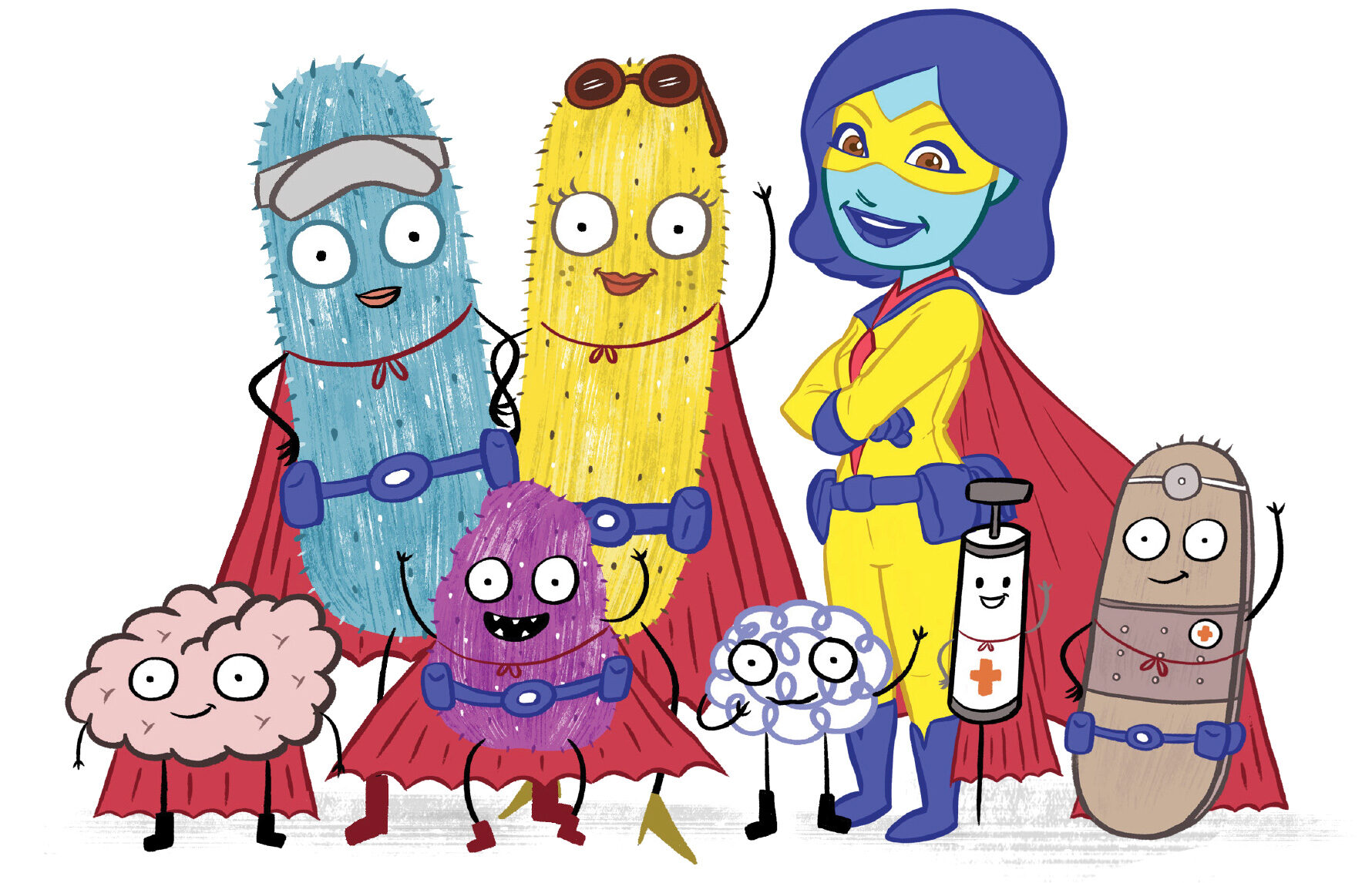
Good pain care for kids should be a right, not a privilege.
The Meg Foundation turns proven pain science into free, digital tools that empower families, clinicians, and the institutions that set the standard for pediatric care.
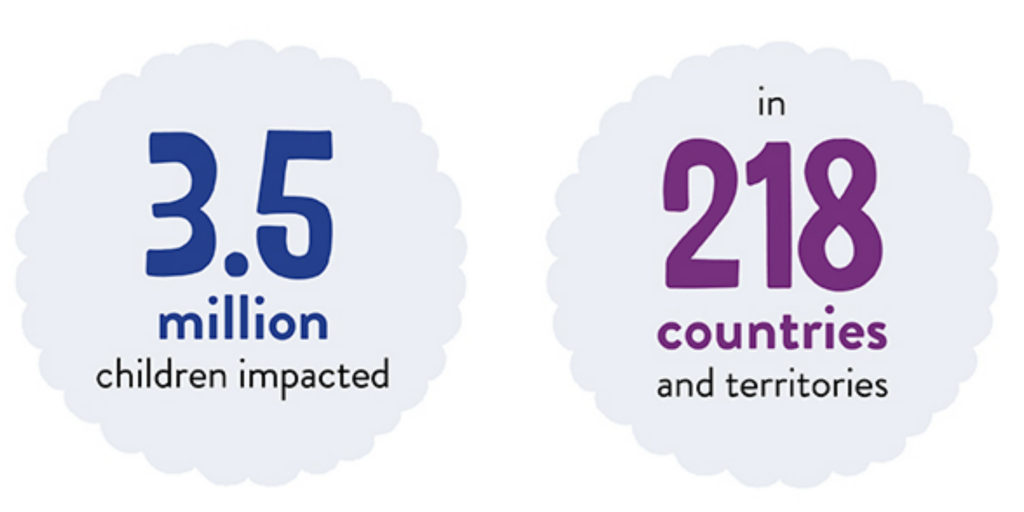
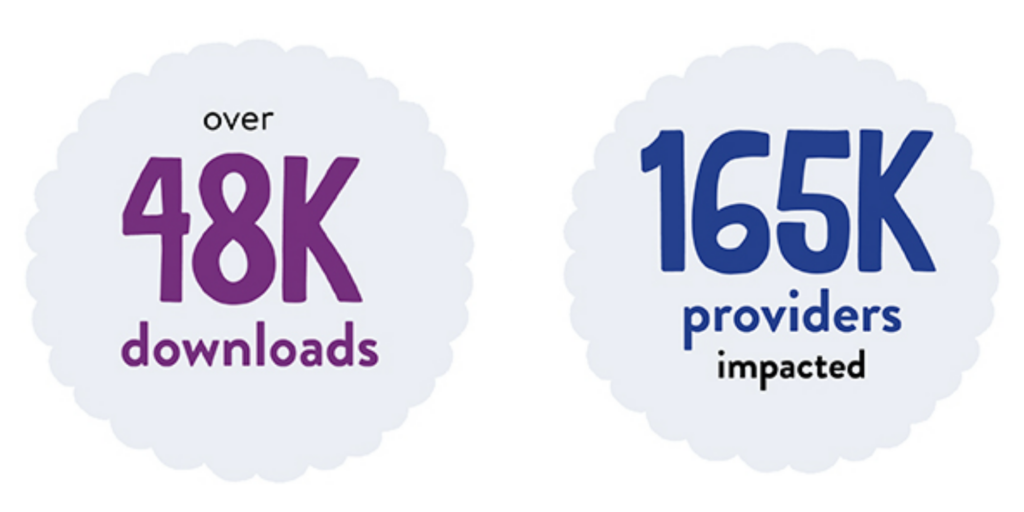
3.5 million kids impacted in 218 countries and territories…so far. We’ve shown what a small team can do. With the right partners, we can do it at a scale that changes public health.
We can all agree that no child should have to suffer when it can be avoided. But the hard truth is that it happens every day.
From needle sticks and medical procedures to surgeries and chronic pain, the clinical practice of pain management is 30-40 years behind the research. The impact goes well beyond a hard few minutes in a doctor’s office or a rough hospital stay. It changes the course of a child’s life.
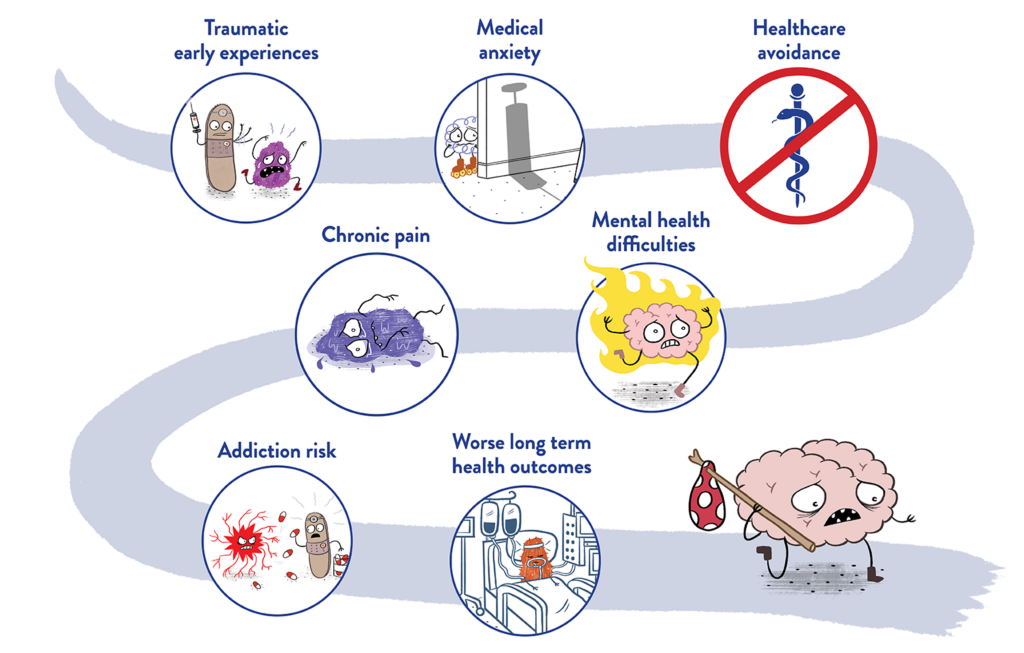
But it doesn’t have to be this way.
Decades of research are clear: there are evidence-based solutions to the pain problem. They are cost effective, proven, and benefit every level of the system: the child, the family, the providers, public health, the business of health care. But they don’t happen consistently in most medical settings…yet. Most people don’t even realize they exist, including health care providers.
We are playing the short AND the long game.
We turn cutting edge pain science into free digital tools that turn information into life changing action, then use technology to reach families and clinicians around the world. Our upstream solutions prevent unnecessary suffering now AND create better long term individual and public health outcomes.
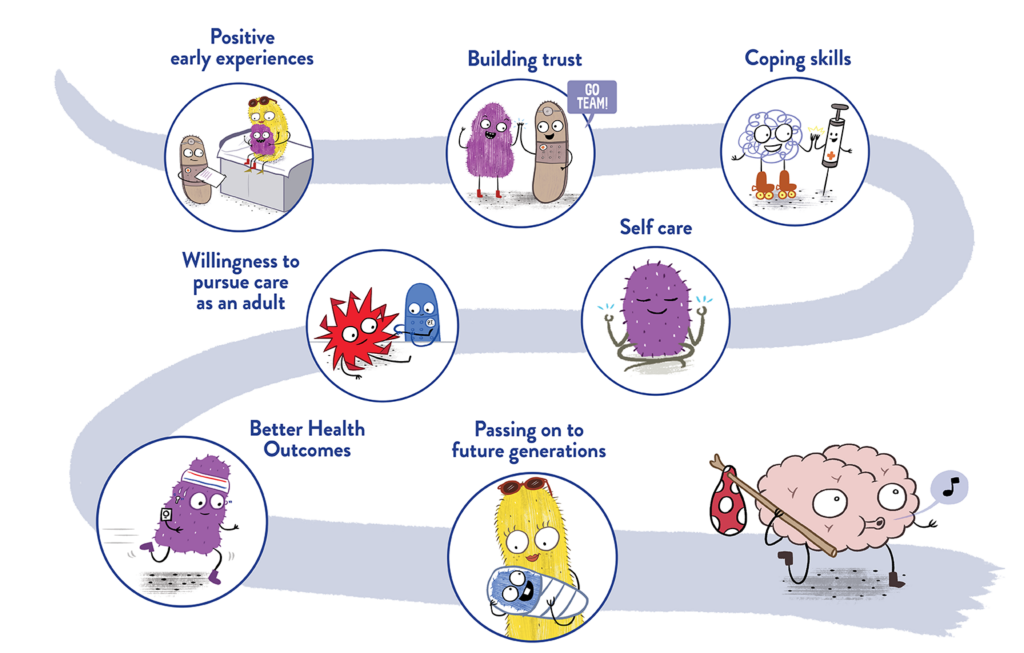
Preventing unnecessary suffering isn’t a nice idea, it’s a moral imperative.
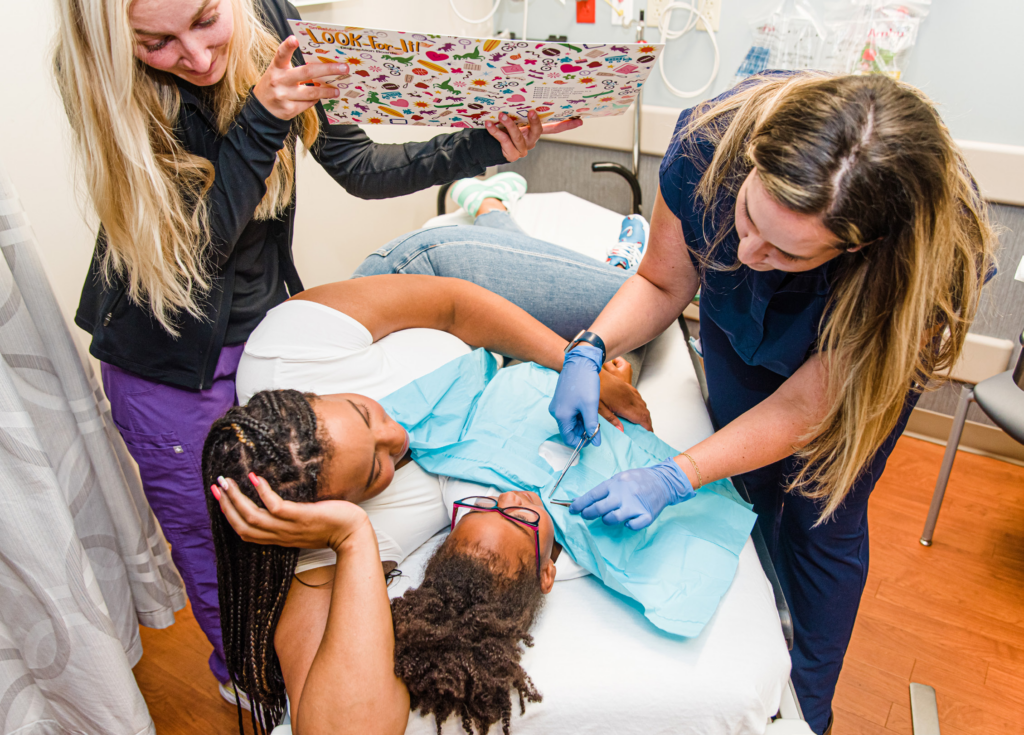
Closing that research/practice gap requires giving families, providers, and health systems the right tools and support when and where they need it.
So that is what we do: build and give away the resources that remove the barriers to quality care.
Anyone and everyone is able to use our resources.
All for free.
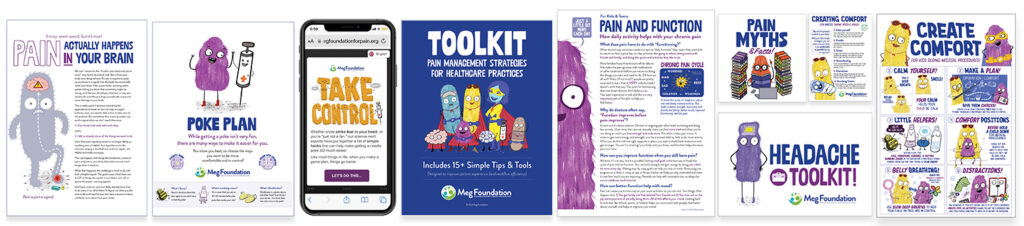
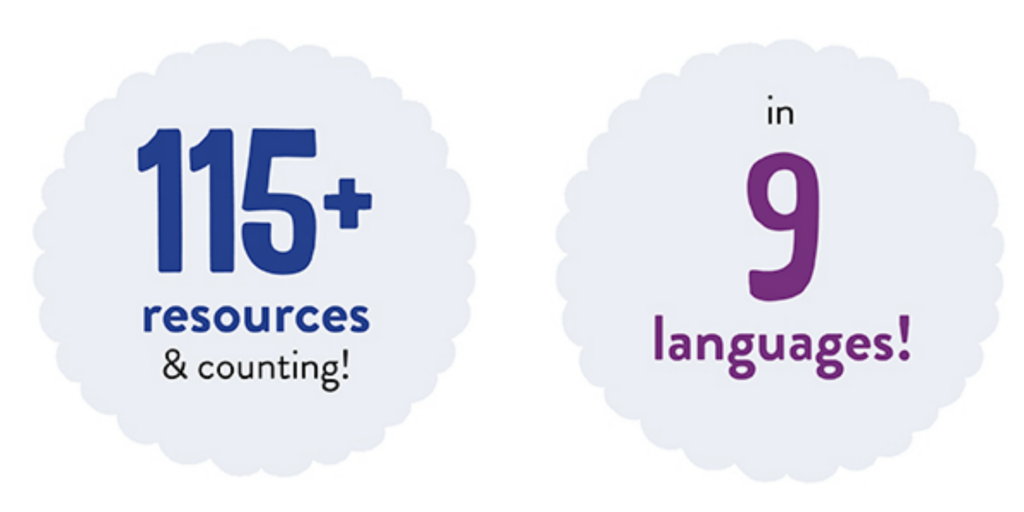
A free library of resources, already in use world wide.
We empower kids, families, and providers with person-centered, expert vetted, science-based resources on pain and medical anxiety focused on self-advocacy and skill building. This includes information guides, worksheets, videos, and interactive technology that creates customized coping plans. Provider focused content provides guidance on how to incorporate resources into clinical practice.
When you check out our resources, you’ll quickly see the branding and style that makes us different. Team Meg includes experts in design thinking, UX, health behavior change, and communications. Our tools are engaging and customizable, because a resource only helps if a child uses it.
At the core of our success: a model built for scale.
Because we don’t just want to change the pain experience for some kids. We want to do it for ALL kids.
Our open-access model is a force multiplier and gives the work an unusually high social impact return. Everything we make is free, digital, and built for mass distribution, so it costs essentially the same to reach one child or a million, and it lives in perpetuity. A single investment keeps generating downloads and uses for years. You are not funding a project that ends. You are funding a permanent expansion of public-health infrastructure that is already trusted, global, and proven.
Here are the strategic building blocks that allow for scalable change at the individual, organizational, and public health level:
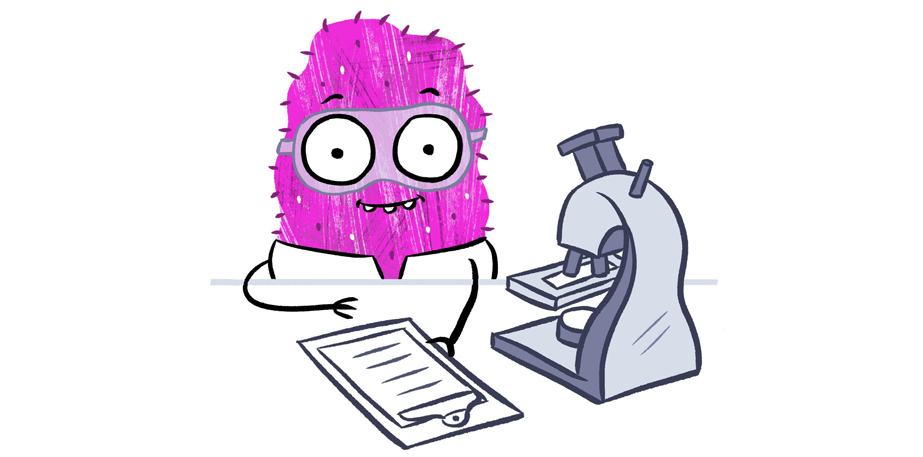
Start with the science.
Everything we do is built on the latest in the research and in line with the best practice guidelines of the top medical and professional organizations in the world. Our powerhouse board and advisory board represent the top experts in the world and ensure the quality of our work.
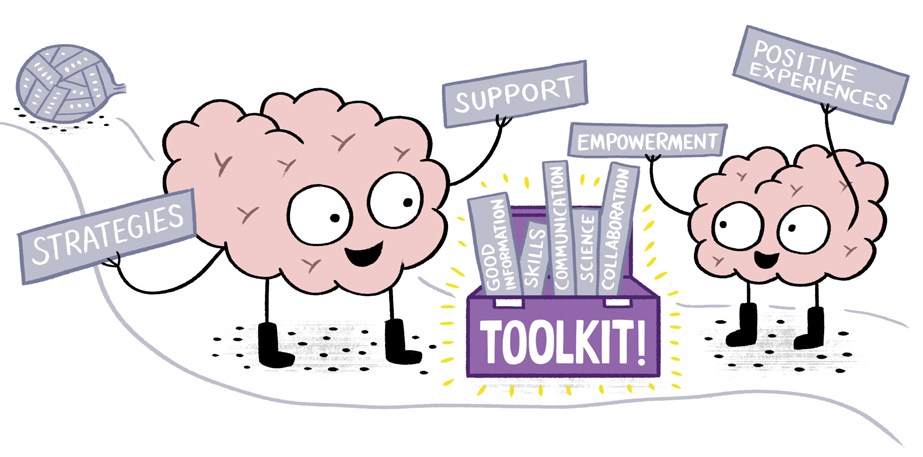
Focus on ACTION.
We believe information isn’t power, but the ability to turn it into action is. People need not just the what and the why, but the HOW. Every single resource we create is designed to be picked up by a lay person and give them something to do that is going to make a difference in their lives today. Skill building creates lasting impact.
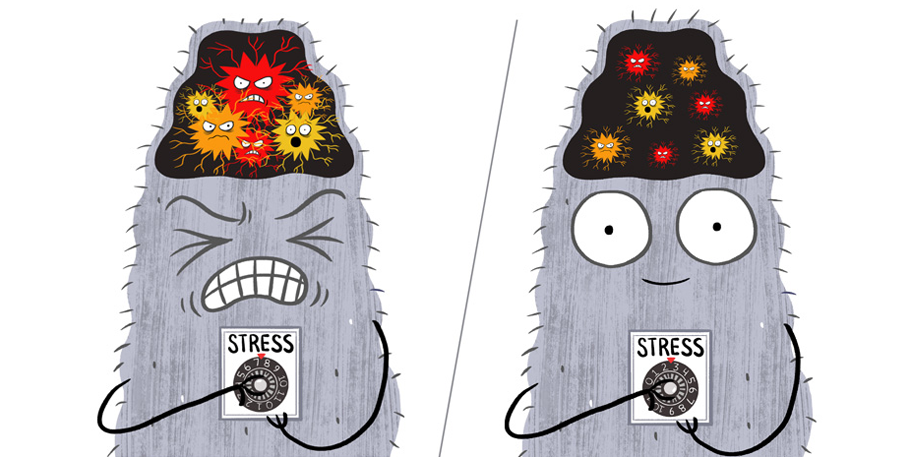
Design makes all the difference.
It’s not just about looking good. It’s about using the language and visuals that break down complex topics, drive home the main points, and turn medical-speak into human-speak to accelerate understanding. Families feel supported and clear on the action they can take to help themselves.
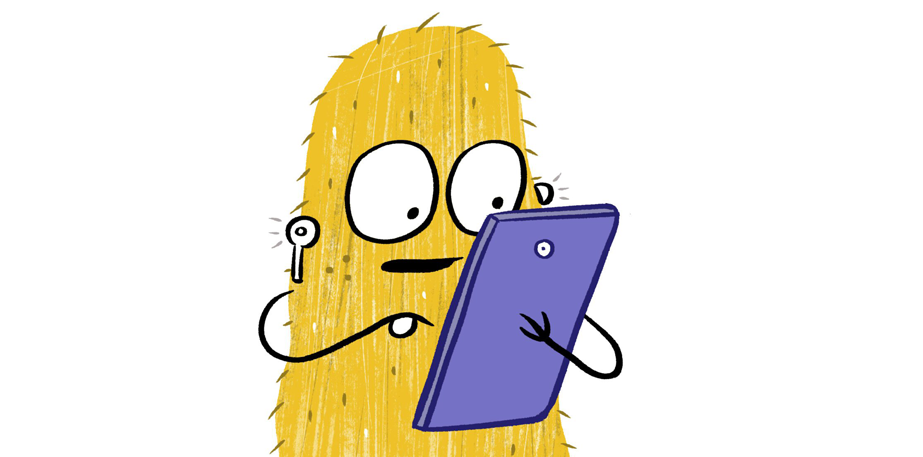
Digital access helps even the playing field.
From the waiting room to the hospital room to your own living room, digital access to our tools means anyone can find and use our tools whenever they need them. It also means kids can walk into medical appointments prepared and confident, and can access coping support even when they don’t have access to a medical team.
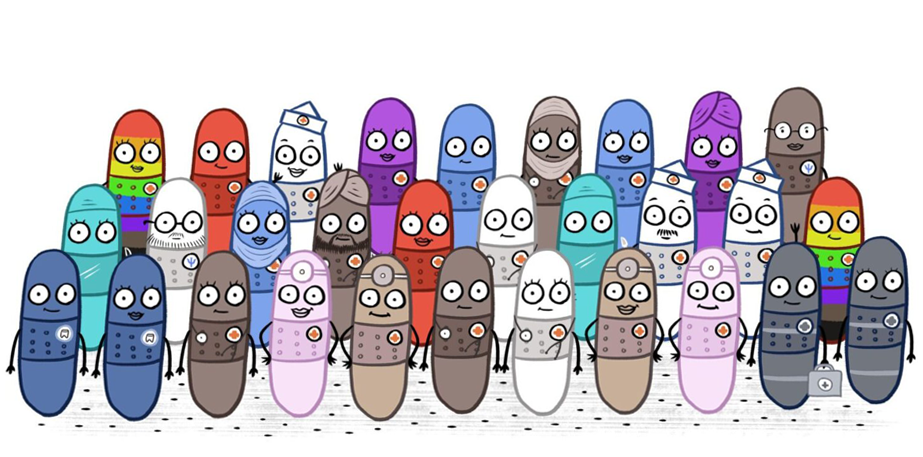
Public and professional trust are foundational.
The CDC didn’t link to our resources just because our branding looks great (and it does). They did it because they and our other partners know that everything we do in line with the latest medical research and vetted by the top experts in the world. Our users trust us because the top professional and medical organizations in the world recognize the quality of what we do.
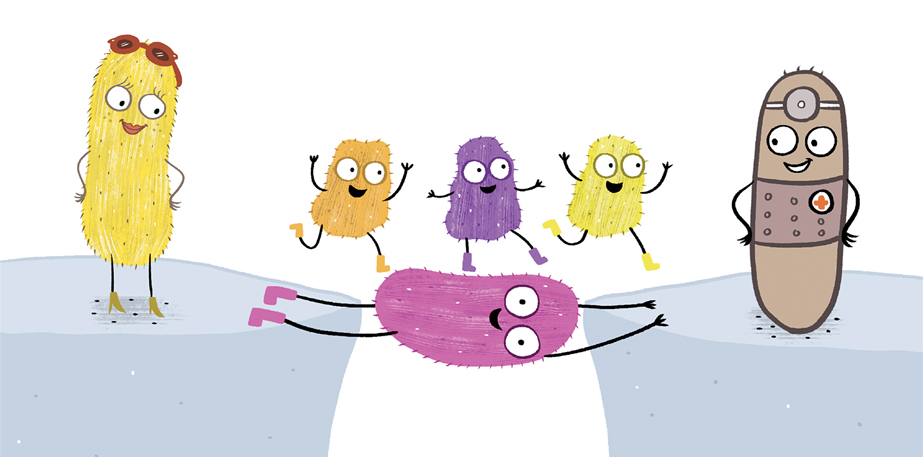
Bridge the science-to-bedside gap.
If it doesn’t fit into a clinical workflow, then it’s never going to be actually useful in medical settings. We create processes and tools that can be both used independently by the family and easily incorporated into patient care.
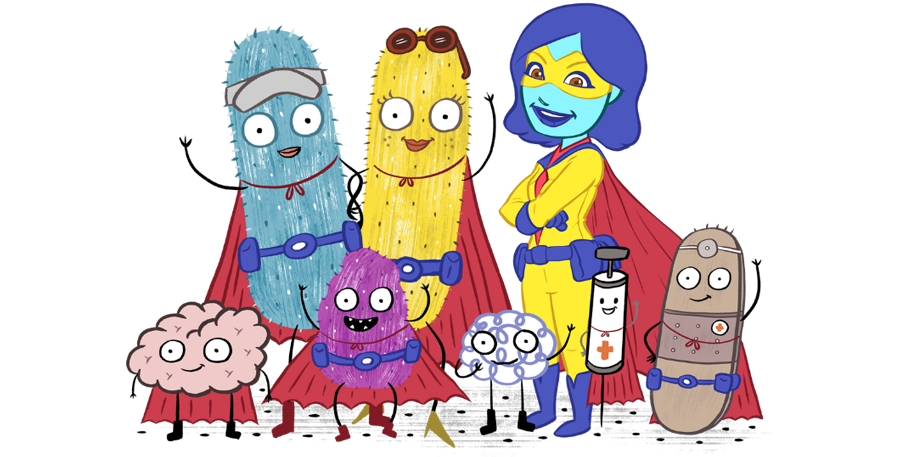
Partnerships are our superpower.
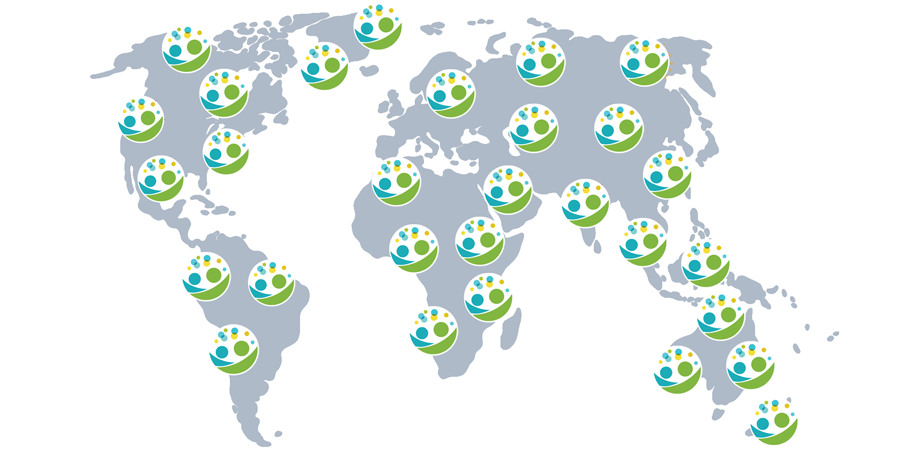
By giving our work away to individual providers, health care institutions, and other nonprofits, we create a massive ripple effect for large scale change and empower the people already doing the good work. Our relationships with organizations like the American Academy of Pediatrics help us support providers, get our resources in the hands of more families, and better understand the needs we are looking to fill. International relationships and translation work mean our work has been used in 218 countries and territories.
Marketing is key to access.
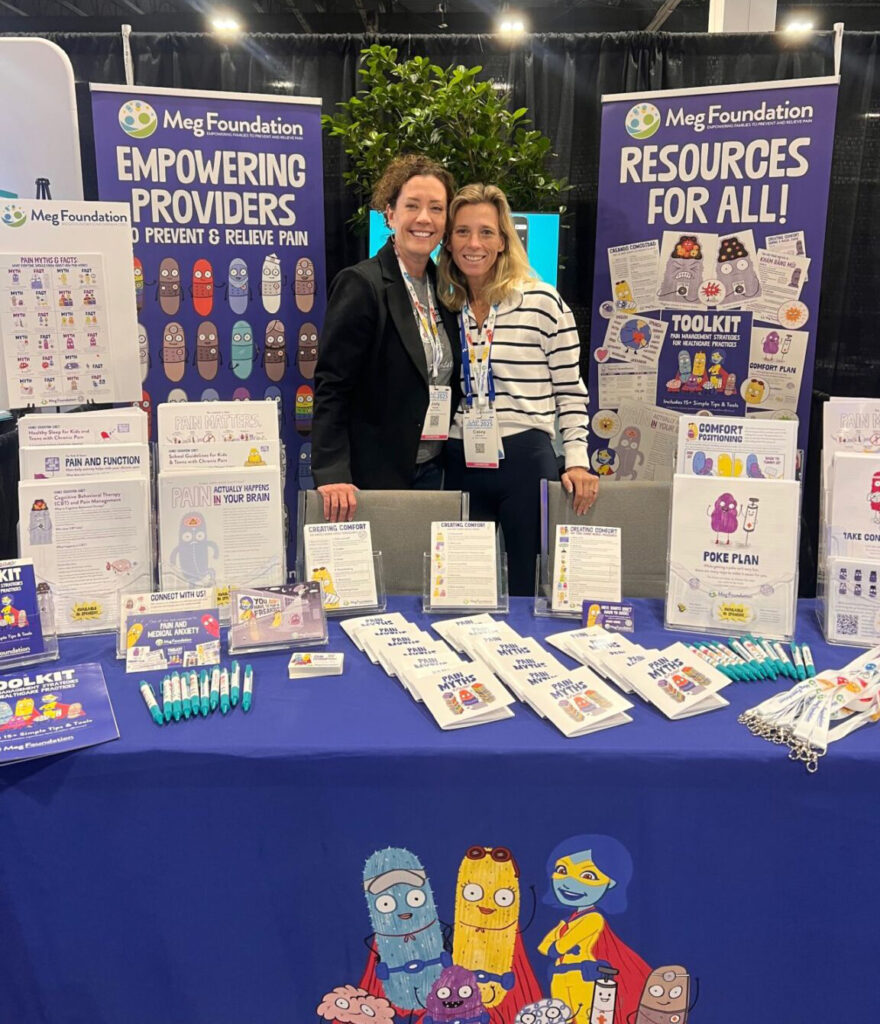
If you build it, they will not necessarily come. We use design thinking, UX, and SEO and AI SEO strategies to makes sure our quality content is the answer that pops up for the desperate parent googling for answers at midnight, and for the provider looking to improve their patient experience, or the hospital system looking to make sure they are following best practices. Direct outreach at conferences and with families reaches new audiences. Evening the playing field means ensuring everyone can find the field.
Thought leadership = systems change.
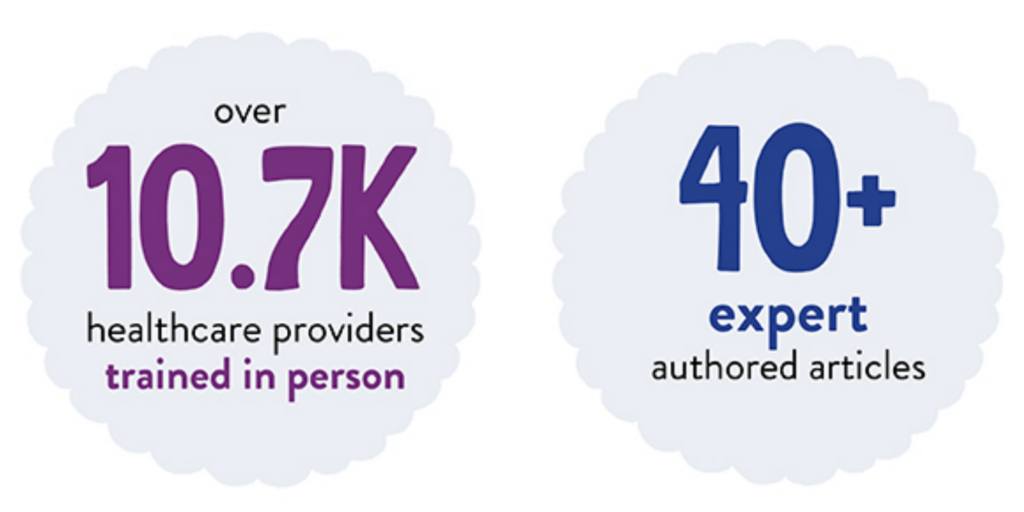
Changing the way people think about pain requires having legitimacy in the academic medicine world and moving outside of it. Our CEO has been invited to testify in front of the FDA and during COVID did press events alongside the Surgeon General. Our work has been featured in journal articles, grand rounds talks, conference presentations, and training videos. Our podcast appearances, magazine articles, and other public facing media work has reached a general public audience of several million.
How we are doing so far:
Trusted and used by the institutions that set the standard for pediatric care, including:
Who is impacted by our work? Everyone. Pain is universal.
Maybe you remember the terror of going to the doctor to get a shot as kid, or the anxiety of watching your child freak out over a vaccination. We all know that adult in our world we worry about because they “don’t do doctors” and don’t take care of their health the way they should. What you might not realize is that fear and avoidance stemmed from a preventable experience in childhood.
The statistics would say that you likely know someone who struggles with addiction to pain meds, or that you or someone you love has seen their life get smaller because of chronic pain. You’ve probably witnessed a family member’s suffering dealing with the pain that comes with a diagnosis like cancer or diabetes, or watched them struggle to find comfort after surgery or injury. The Meg Foundation exists because the research is clear that much of that pain is preventable.
Pain is an inescapable part of being human. The negotiable part is having the knowledge and skill set to cope with it. That is a solvable problem.
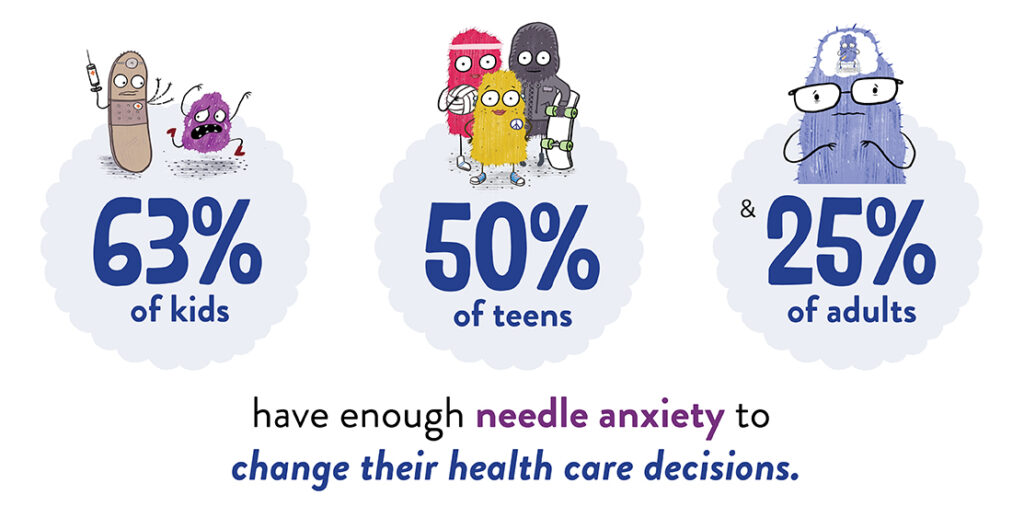
The size and scope of the problem will likely surprise you.
- Doctors in the US have only 7-10 hours of pain education during their entire training, despite the fact that poorly managed pain is the number one reason people seek healthcare, the leading cause of hospital readmission after discharge, and at the root of most medical trauma.
- The stress of dealing with patient’s pain is a major contributor to health care provider burnout.
- Pain is the leading the cause of disability in the United States, and largest drain on the health care system.
- It costs the US economy an estimated 635 billion a year, more than cancer, heart disease, and diabetes combined.
- In 2019, 20.4% of American adults reported struggling with chronic pain. By 2024, it was 24.3%.
- 20% of children experience chronic pain. Teaching them early how pain works and how they can manage it prevents them from becoming a statistic as an adult.
Reversing these trends requires focusing on where it starts: in childhood.
What the people closest to our work are saying:
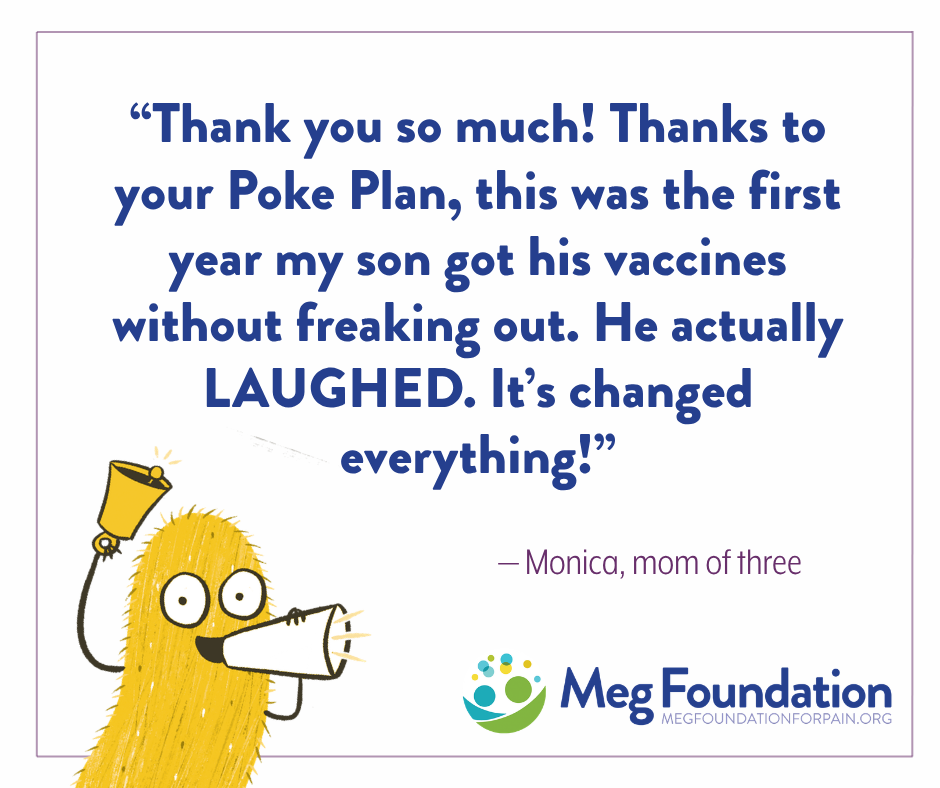
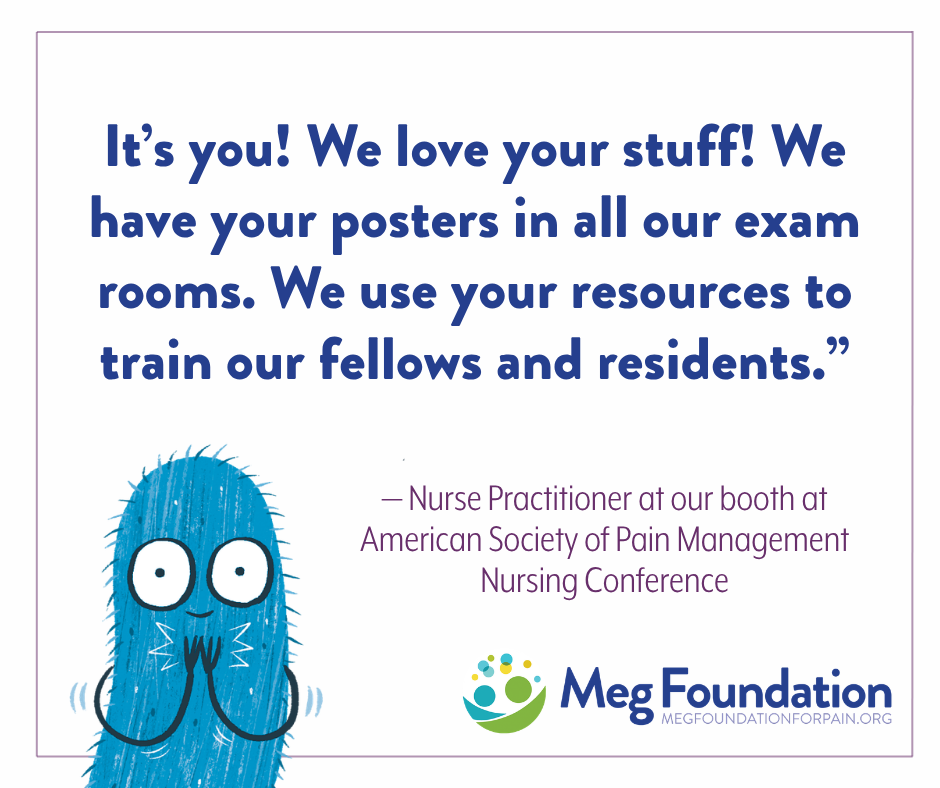
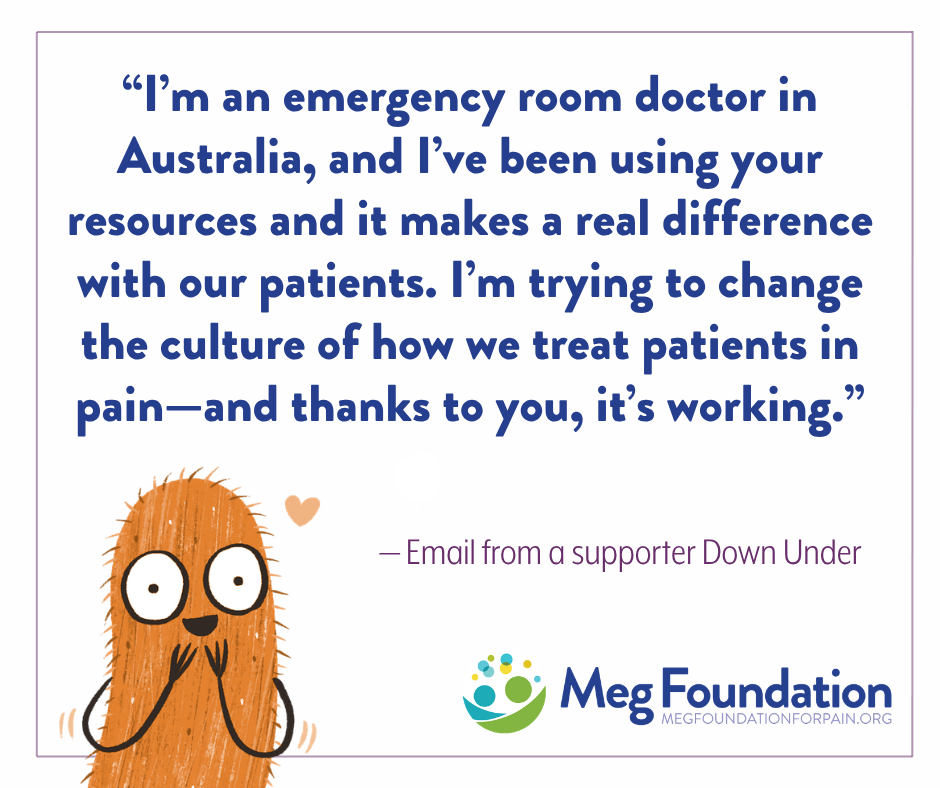
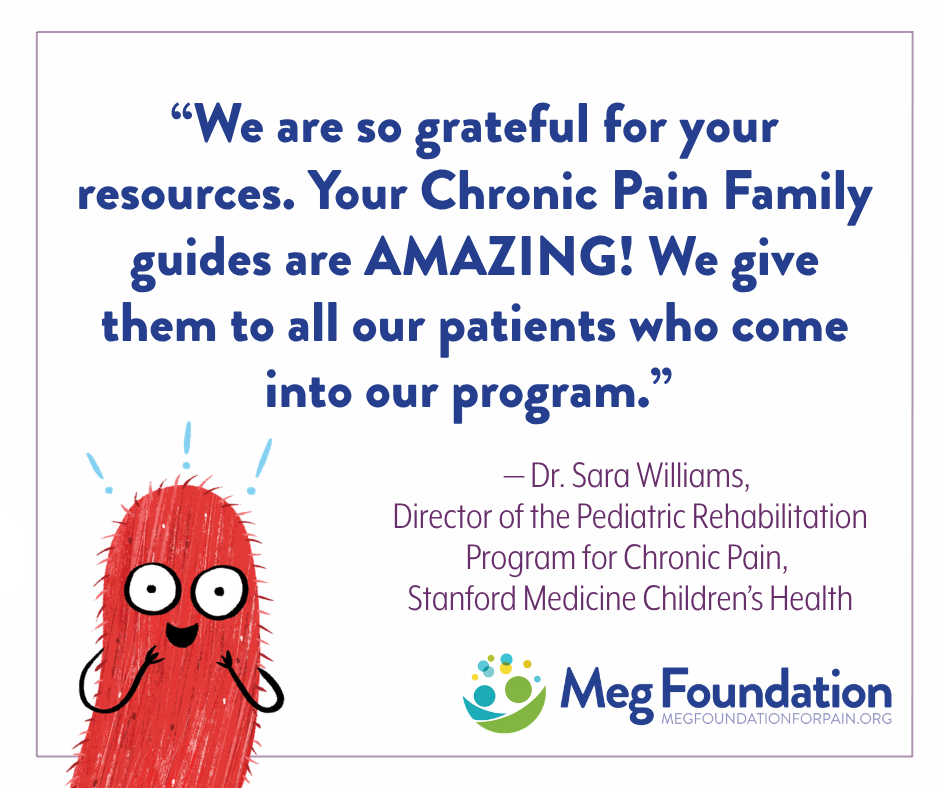
The momentum is undeniable. The potential is staggering. What’s limiting us isn’t demand or opportunity — it’s capacity.
We’re proud of what a handful of people have built — and more excited about what it proves is possible. Families, providers, and partners ask us for more every day. We aren’t limited by need, interest, or opportunity. We’re limited by the hours in the day and the size of the team.
A small team already reaches millions. More capacity means more tools built, more languages translated, more systems changed, and significantly less suffering. Each initiative below is an example of the projects we are ready to scale with the right investment:
- Taming the pain dragon – good pain care starts with understanding that pain is biological, psychological, and social. Our content on this biopsychosocial model is already our most popular — and users want more: animations, comics, and formats tailored to specific audiences.
- Specialized condition toolkits — expanding beyond our foundational tools and Headache Toolkit into into diagnosis and situation specific use cases such as cancer, diabetes, sickle cell, Ehlers-Danlos, and neurodivergence.
- Global distribution & remote access — deepening the translation and community-health-partner work that already carries our content worldwide. This includes expanding marketing efforts to reach more audiences.
- Provider training at scale — accessible, role-specific training to remove a top barrier to better care.
- The first 1,000 days — content for newborns and new families that starts pain care right from the very beginning and establishes Meg Foundation as a trusted life long supportive resource.
- Responsible AI — customized family experiences built to our standards of quality and privacy.
We are very proud of our track record of efficient use of funding. The Meg Foundation runs lean — a small virtual team, almost no overhead — so the money goes straight into free, digital tools in the hands of families and providers, not office costs. We are happy to be transparent about how funding is spent and how we make the most of every dollar.
Let’s talk about what’s possible.
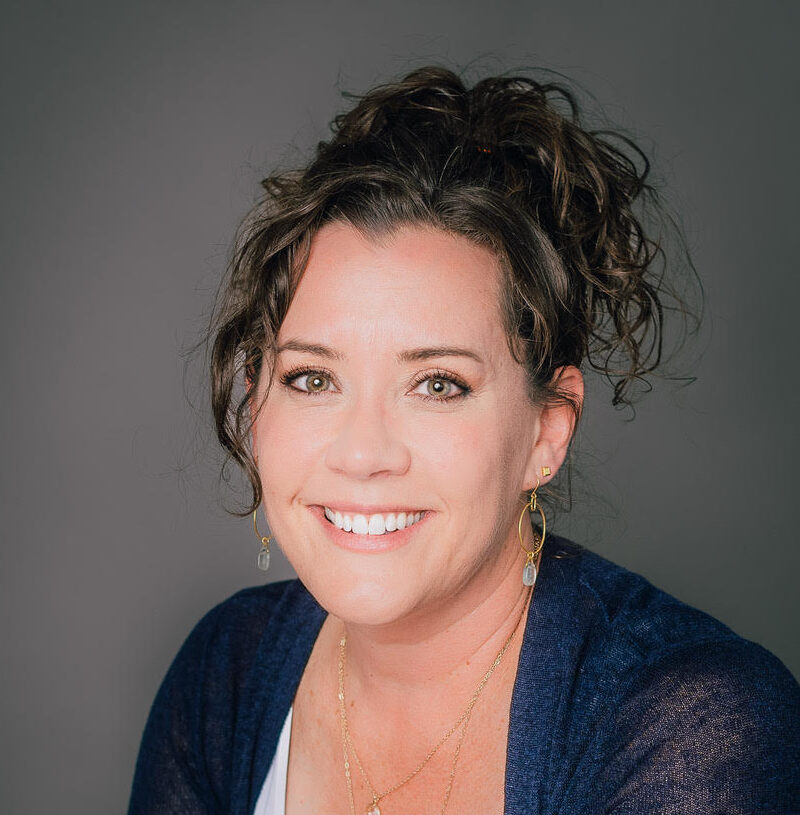
I’d love to start a conversation about what draws you to this work and how your support could create change at scale.
Dr. Jody Thomas, PhD, Founder & CEO
Clinical health psychologist and internationally recognized expert in pediatric pain and medical trauma.
Our vision:
A world free of unnecessary suffering that has closed the gap between science and clinical practice. A world where every child, family, and medical provider has the skills, information, and tools they need to understand, prevent, and manage pain. A world where good pain care is treated as a basic right, not a privilege.