Good pain care for kids should be a right, not a privilege.
You can help make it one — not for a handful of children, but for millions, at a scale very few investments in children’s health can match.
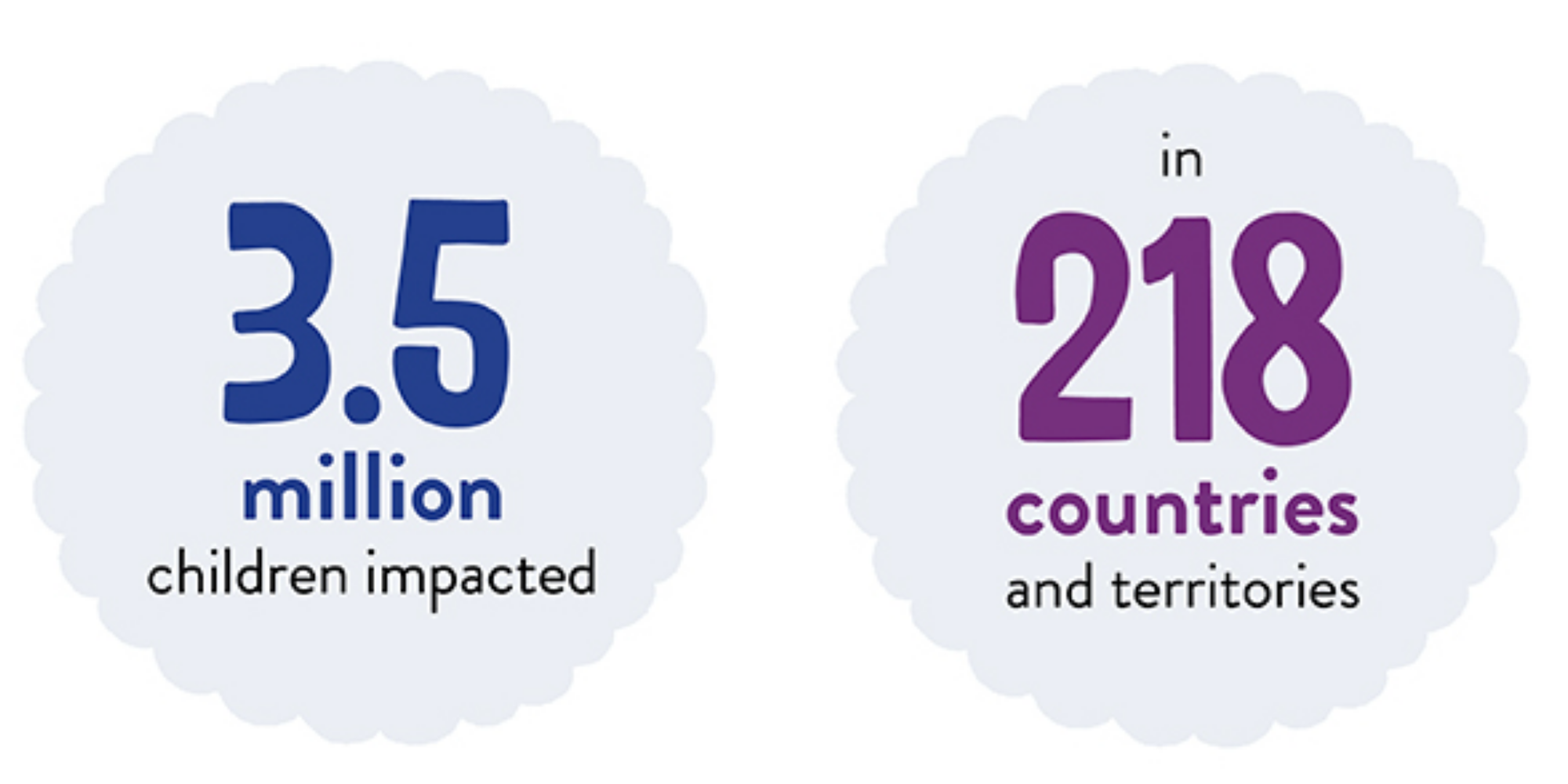
3.5 million children reached across 218 countries and territories — built by a powerhouse team that is only beginning to show what’s possible with the right partners alongside us.
We empower kids, families, and clinicians with what they need to manage pain and medical anxiety — whether it’s a needle, a surgery, an injury, or pain that doesn’t go away. Our resources are free, evidence-based, and turn information into life-changing action.
Right now, a child is in pain — and it didn’t have to happen.
From needle sticks to surgeries to the daily reality of chronic illness, we know how to prevent much of what children endure. We just don’t do it.
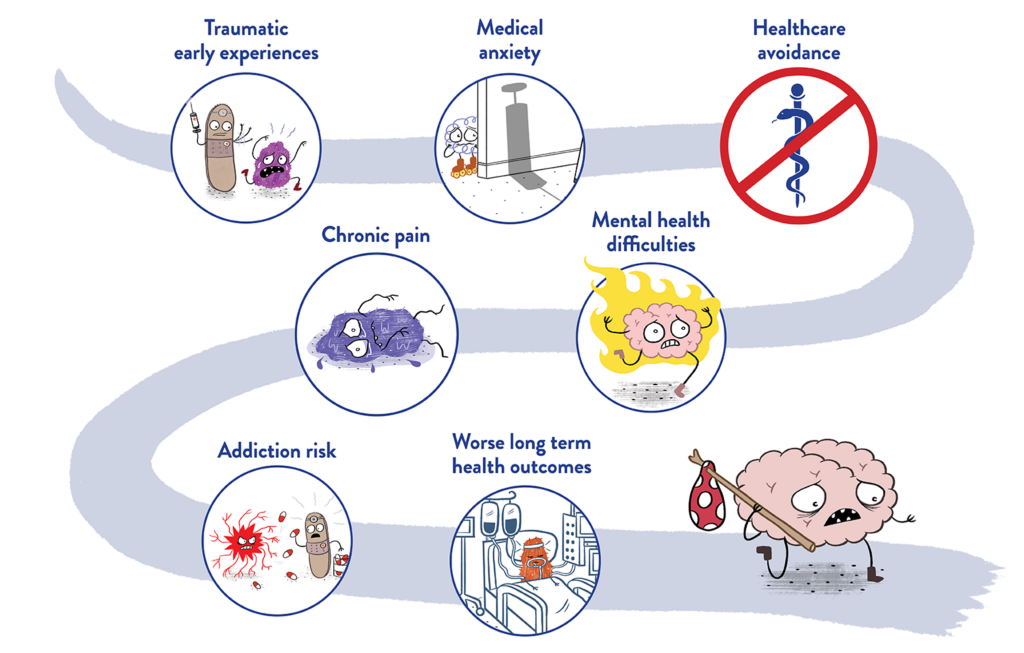
The practice of pain management is decades behind the research.* That lag has real consequences that go well beyond a hard few minutes in a doctor’s office or a difficult hospital stay: it can shape how a child relates to their own body, their health, and the medical system for the rest of their life.
The size and the scope of the problem will likely surprise you:
- 63% of kids, 50% of teens, 25% of adults have significant needle anxiety that impacts their health care decisions.**
- In 2019, 20.4% of American adults reported struggling with chronic pain. By 2023, it was 24.3%.***
- Chronic pain costs the US economy up to $635 billion a year — more than cancer and diabetes combined, and more than heart disease alone.****
- 20% of children experience chronic pain.***** Teaching them early how pain works and how they can manage it can prevent them from becoming a statistic as an adult.
This is personal, for all of us.
Perhaps you remember your fears of a shot as a child, or the helplessness of watching your own child come undone before a routine vaccination. We all know that adult in our world we worry about because they “don’t do doctors” and don’t take care of their health the way they should. What you might not realize is that fear and avoidance stemmed from a preventable experience in childhood.
The statistics would say that you likely know someone who struggles with addiction to pain meds, or that you or someone you love has seen their life get smaller because of chronic pain. You’ve probably witnessed a family member’s suffering dealing with the pain that comes with a diagnosis like cancer or diabetes, or watched them struggle to find comfort after surgery or injury. The Meg Foundation exists because the research is clear that much of that pain is preventable.
The science already exists. What is missing is the capacity to place it in the hands of every child who needs it – and that is precisely where you come in.
The rare gift that keeps working long after you make it.
Everything we build is free, digital, and designed for mass distribution, which means it costs essentially the same to change the experience of one child as it does to reach a million.
A gift here does not fund a project that ends when the money runs out; it underwrites a permanent piece of public-health infrastructure that is already trusted, already global, and already proven. It continues to be used by families and health care providers years after the initial investment. Impact doesn’t stop: it grows.
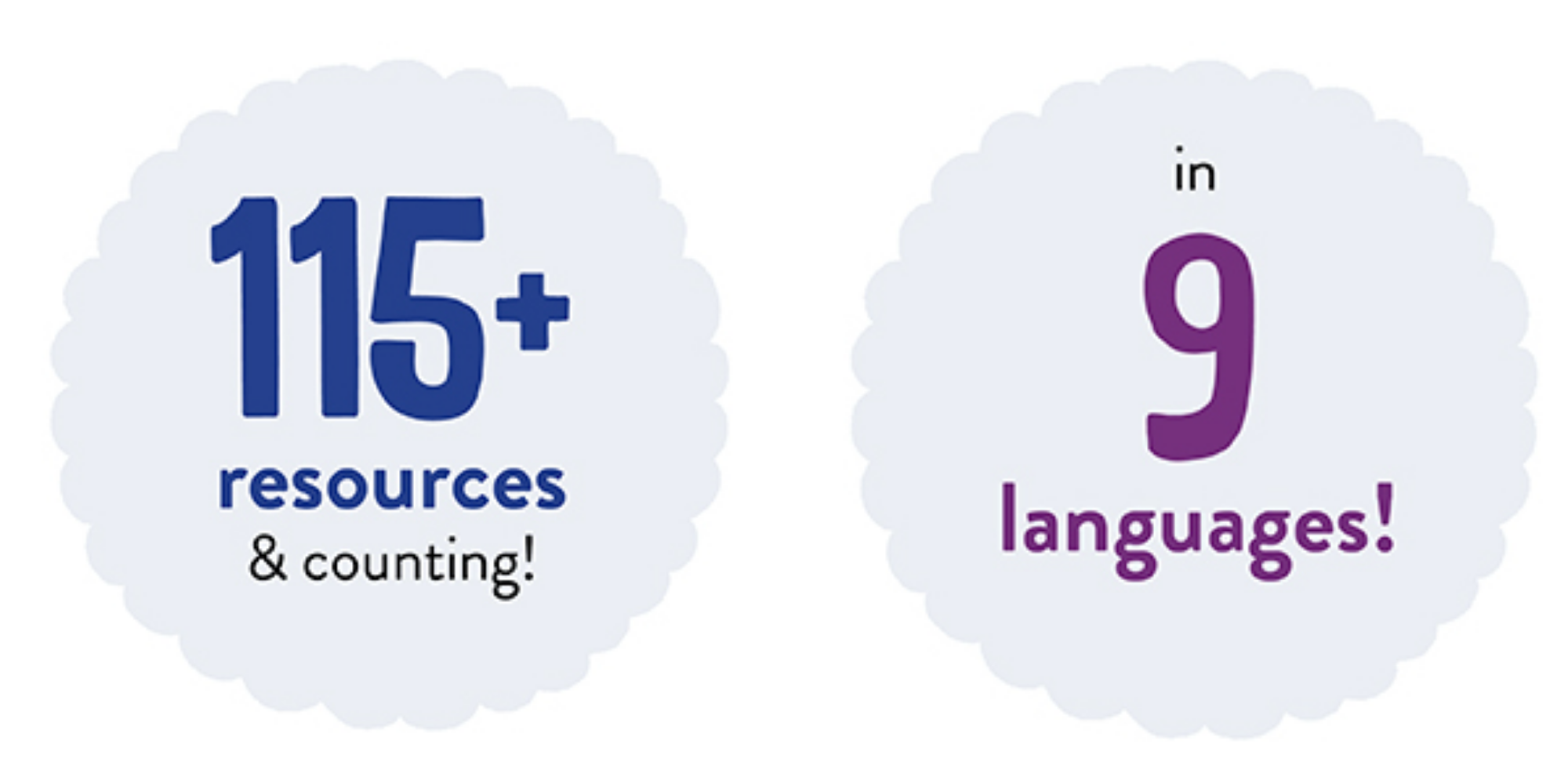
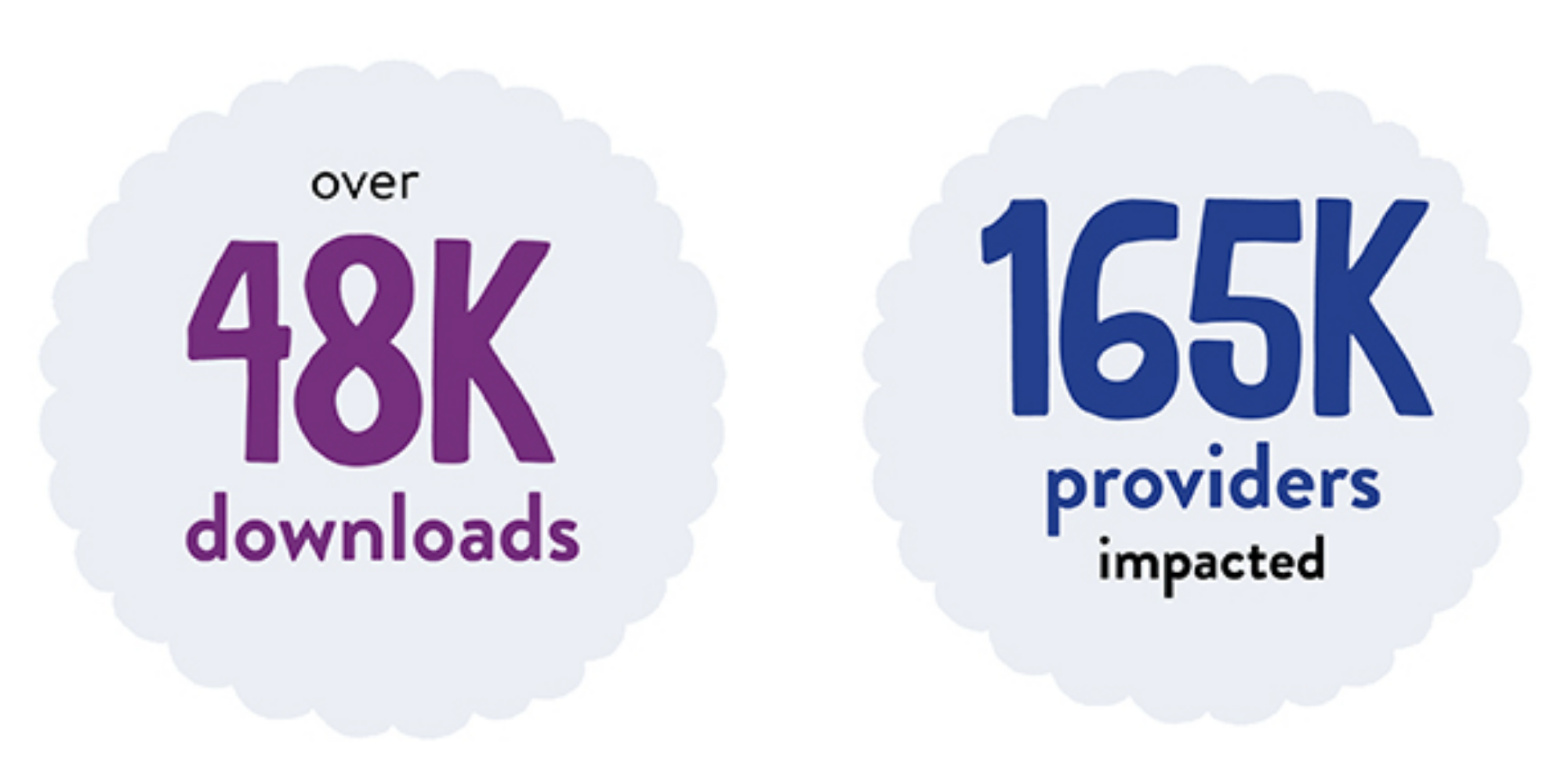
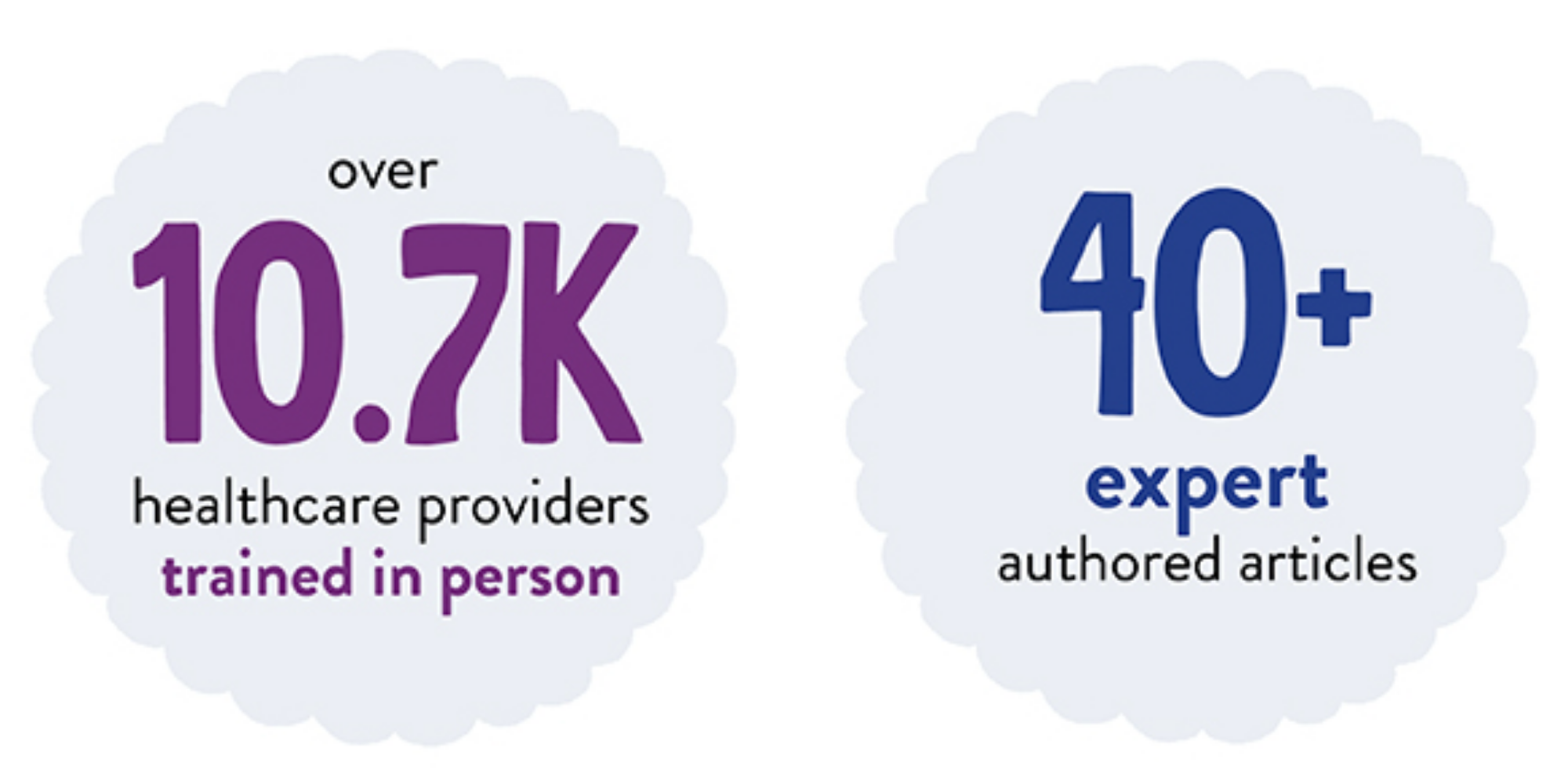
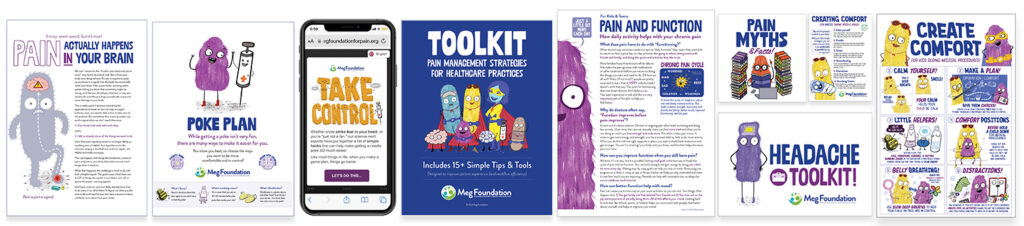
Our open source resources turn information into action that prevents and relieves suffering.
Healthcare equity often comes down to access. Our resources are available and used by everyone from the frazzled parent looking for answers at home to healthcare teams looking to improve their clinical care.
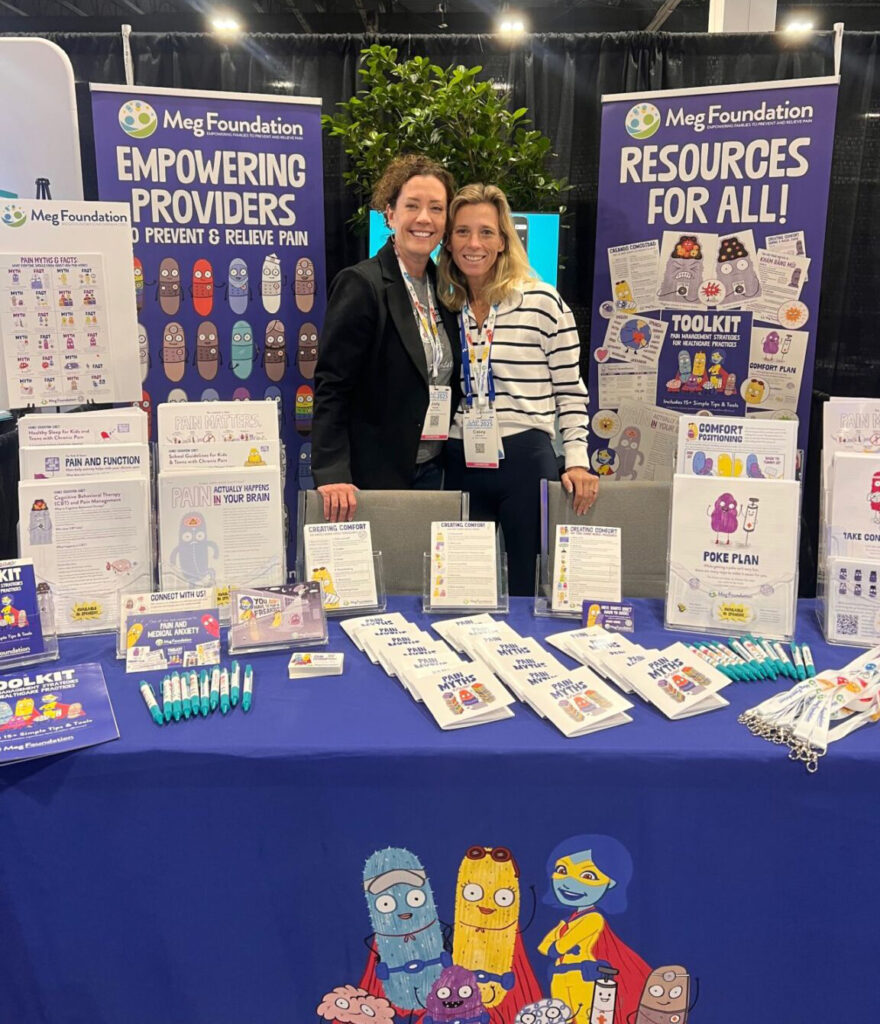
Trusted by families and the institutions that set the standard for children’s health.
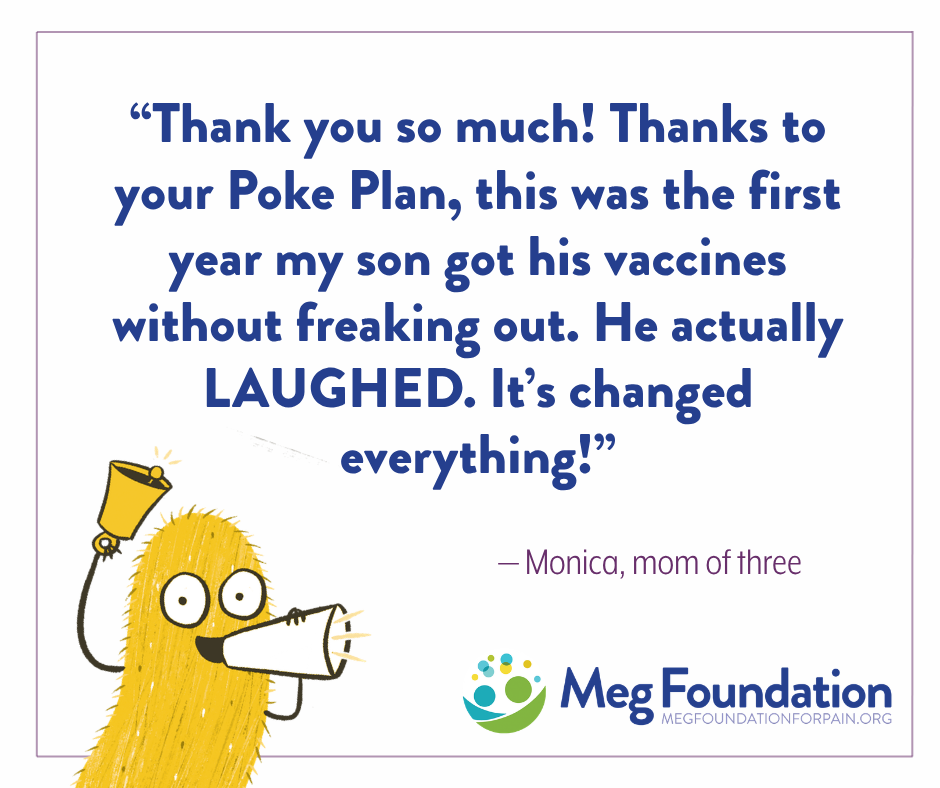
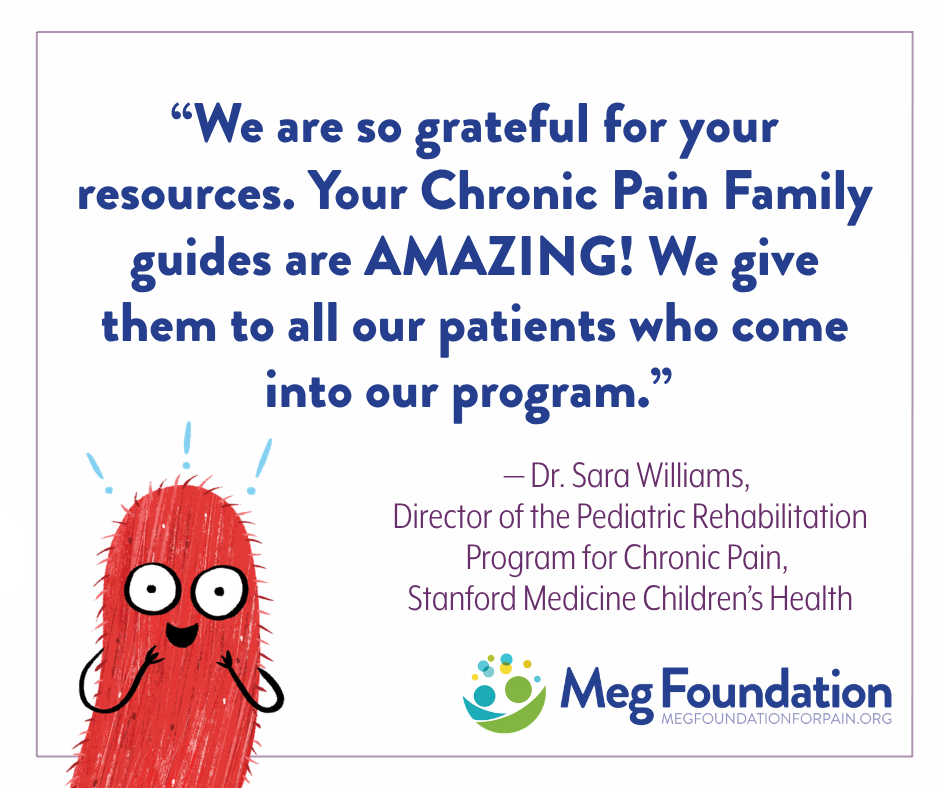
Partnerships are our superpower, and public trust is our foundation. Our resources are used and referenced by the CDC, the NIH, the American Academy of Pediatrics, and leading children’s hospitals. They are built on current research and vetted by some of the foremost pain experts in the world, many of whom serve on our governance and advisory boards. Families trust what we make because the institutions those families already rely on trust it too.
Kids like Emi are the heroes who inspire our work. Hear her story and see how the power of what we do can transform the experience of families.
Your support makes all the difference. Choose where your impact goes.
Families, providers, and partners ask us for more every day. Demand and opportunity are not our constraints. Capacity is.
More capacity means more tools built, more languages translated, more healthcare systems changed, and fewer children experiencing needless suffering. Every project below is designed and ready. Each one is waiting on funding.
- Taming the Pain Dragon. Expand our most popular content on understanding and leveraging the biopsychosocial model of pain into animations and comics tailored to specific audiences. $85,000
- Specialized condition toolkits. Build individual tailored resources for conditions like cancer, sickle cell, diabetes, EDS, neurodiversity, and other specialized groups. $80,000 to $150,000 per toolkit depending on topic
- Global distribution and translation. Carry proven tools into more languages and more countries. $5,000 per language
- Provider training at scale. Remove one of the most significant barriers to better care at the bedside. $250,000
- The first 1,000 days. Begin pain care at birth and grow alongside the family from the very start. $160,000
- Responsible AI. Create a responsive system that customizes a family’s experience with our content to create even greater impact. $175,000
And for a donor who would rather strengthen the whole mission, an unrestricted gift allows us to direct resources wherever the need is greatest at any given moment.
Let’s talk about what’s possible.
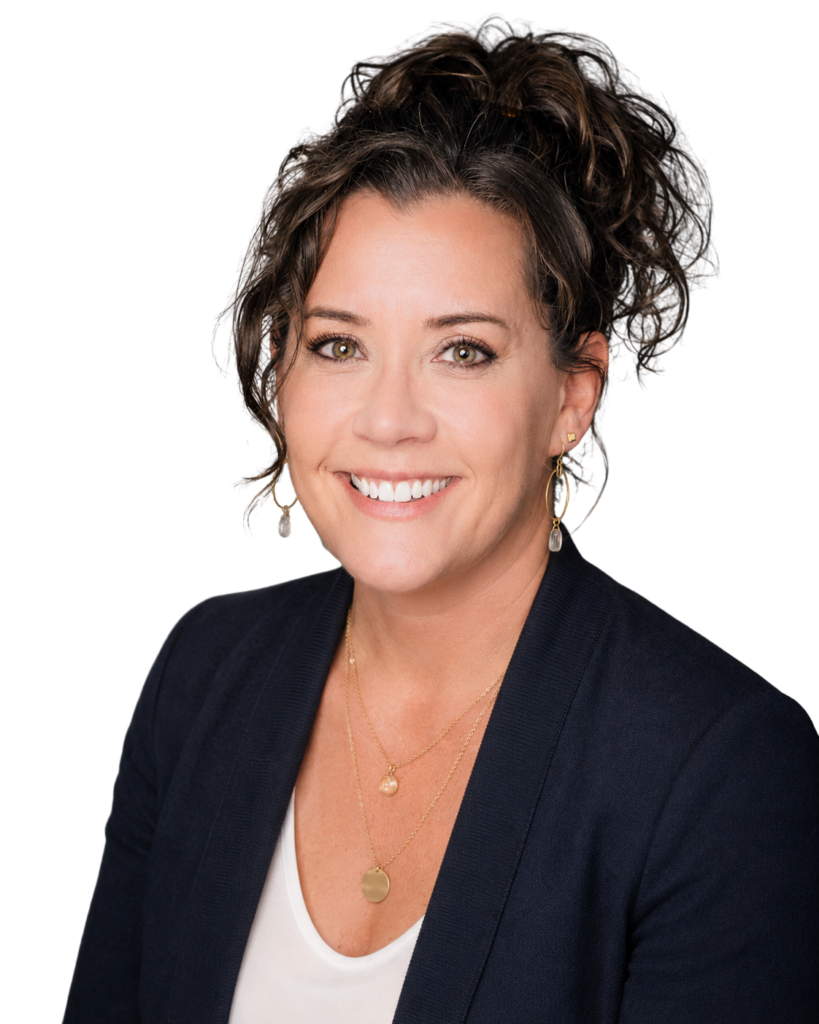
Jody Thomas, PhD, Founder & CEO
Clinical health psychologist and internationally recognized expert in pediatric pain and medical trauma.
I would love the chance to hear what draws you to this work and to show you exactly where your support could create change at scale. Reach me directly, and let’s begin the conversation. jody.thomas@megfoundationforpain.org.
Meg Foundation is 501c3 nonprofit (EIN 82-3010153)
WAYS TO GIVE: A multi-year pledge, a gift through a donor-advised fund, a gift of stock, or a gift in your will; reach out and we will make any of them straightforward.
WANT MORE FINANCIAL DETAIL? We are firm believers in transparency, and proud of our financial efficiency. If you'd like to learn more about our budget, funding, or any other financials, let us know and we will make sure our CFO gets you what you need.
Our vision:
A world free of unnecessary suffering that has closed the gap between science and clinical practice. A world where every child, family, and medical provider has the skills, information, and tools they need to understand, prevent, and manage pain. A world where good pain care is treated as a basic right, not a privilege.
With you, we get there sooner.
Citations: